When WordPress and WooCommerce fit
This approach fits stores requiring separately designed layouts, substantial content sections or additional business logic. We review requirements and maintenance responsibilities before selecting the platform.
If an established commerce platform meets the requirements, we compare the project with Horoshop. Other CMS options are assessed separately.
Catalog structure and purchase journeys
-
01
Catalog
Categories, filters and attributes help the buyer narrow the choice.
-
02
Product page
Price, description and variants support the buying decision.
-
03
Cart
Items, quantities and totals are clear before checkout.
-
04
Checkout
Contact details, delivery, payment and order confirmation.
After checkout: send the agreed fields and statuses to connected systems and check analytics events.
- Categories, filters, attributes and product variations.
- Product pages, cart, checkout and required payment and delivery options.
- Content sections, language versions and access rules where needed.
- Initial product entry, migration or imports from a reviewed data source.
We agree on the data structure before population, including required fields, variations and handling of missing products.
Design and content editing
We build or adapt the agreed layouts, including catalog, product and mobile checkout pages, and establish which sections your team needs to edit.
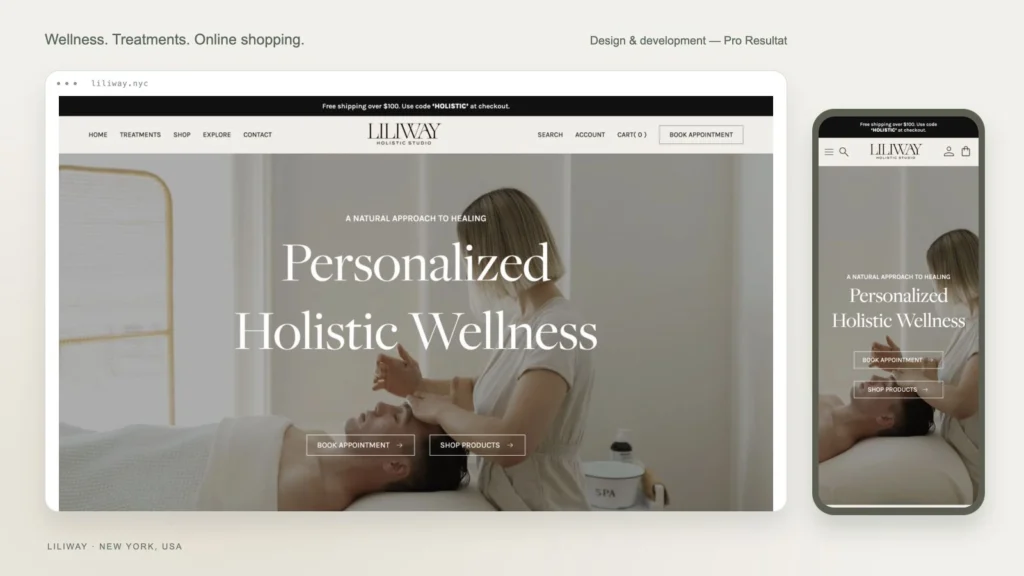
Our Liliway case shows a service website combined with a product catalog. Each store’s feature set is scoped separately.
Integrations and order testing
Payments, delivery, CRM, feeds and business systems require compatible solutions or custom work. We test data exchange through actual test journeys rather than simply checking that a module is installed.
- Purchase. Product, variation, cart, address, payment and order confirmation.
- Data exchange. Agreed statuses, fields and receiving-system behavior.
- Measurement. Test analytics events and check for duplicate order events in the agreed journey.
Where needed, we can synchronize the catalog, prices and stock with supplier systems and send orders to a CRM. Implementation depends on available APIs, extensions and data exchange rules.
Planning for ongoing maintenance
WordPress/WooCommerce store
A store with an agreed design, catalog, cart and checkout. Complex integrations and additional functionality are estimated against the requirements.
Optional design
We build your WordPress/WooCommerce store from a ready-made theme or your brief. Custom design in Figma is agreed separately.
- Custom Figma layout
- Additional fee from $500
For stores, we agree on initial manual entry of up to 20 products. Product research and content preparation, large catalogs, bulk migration and ongoing synchronization require a separate estimate.
Domain registration, hosting or platform fees, and paid themes and extensions are considered separately. Page count, content readiness, integrations and approvals affect the estimate and schedule.
For WordPress/WooCommerce, we agree on hosting, backups, system and extension updates, and how changes will be tested. Paid extension licenses and recurring costs are considered separately.
After handover, we establish who maintains the store. New functionality and integration changes are planned around their impact on checkout.
Preparing for an estimate
Describe the range, languages, user journeys and integrations. Share the catalog source, design references and available information about the current system so we can assess scope and dependencies.
Tell us about your project or use the inquiry form on this page.