Naizi: Google Ads recovery and protection against fake orders
From campaign recovery to Fraud Monitor V2: how we moved anomalous-purchase protection ahead of checkout completion.
View the results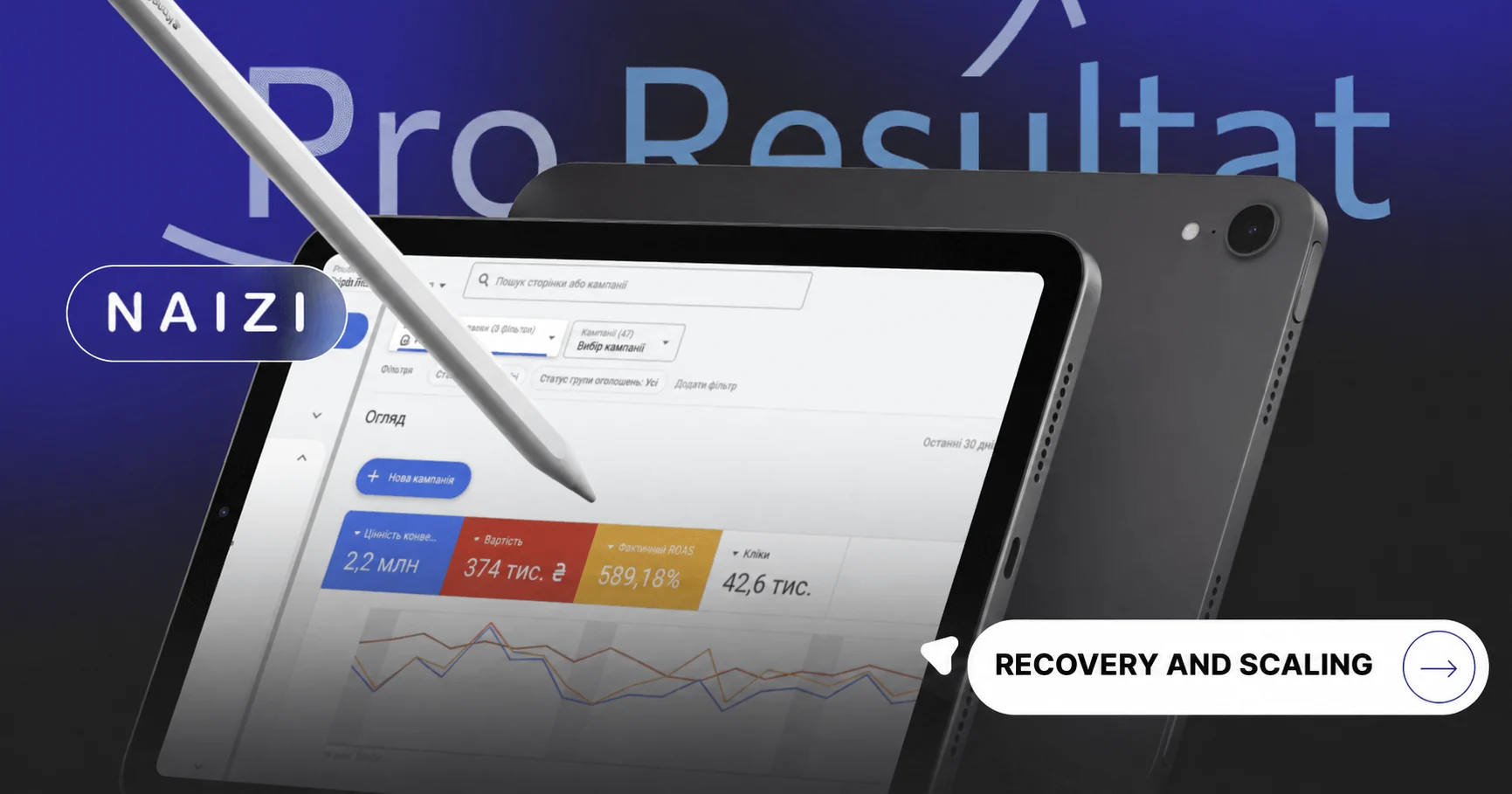
- ROAS
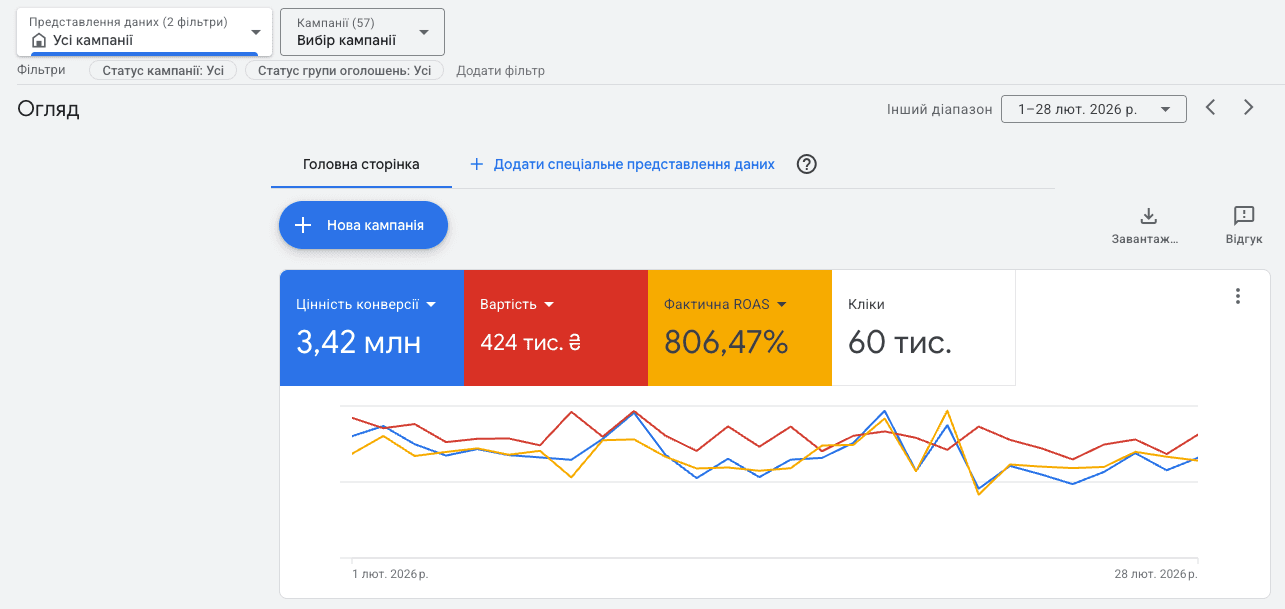
- 806%
- Conversion value
- 3 420 000 UAH
- Ad spend
- 424 000 UAH
- Returned to the budget
- 87% for invalid clicks
Advertising figures for February 1–28, 2026. The Fraud Monitor section below covers a separate stage in September–October 2026.
About the project
Naizi is a Ukrainian online store. The initial work covered Google Ads structure, the product feed, strategies and analytics. After a period of managing advertising independently, the client returned to the team with lower performance and a fake-order problem.
- Project
- Naizi.in.ua
- Market
- Ukraine · online store
- Work began
- August 2024
- Work resumed
- May 2025
From advertising recovery to order protection
We resumed work in late May 2025 after a break in cooperation. Campaign, measurement and fake-order issues needed attention. We first restored the advertising setup and worked on conversion quality.
Protection evolved with the problem
The first Fraud Monitor collected suspicious-activity data for subsequent IP filtering. A renewed spike in anomalous purchases in 2026 exposed its limitation: the first fake order could reach the data before filtering. In V2, we moved the check ahead of checkout completion.
What we did during advertising recovery
01
Reviewed the campaigns
We audited and restructured campaigns, reviewed bidding strategies and product groups, and worked on targeting and the feed with attention to traffic and conversion quality.
02
Worked on measurement
We updated GA4 and GTM events and reviewed Purchase tracking and attribution. Fake orders were identified and addressed in the data to distinguish anomalies from actual results.
03
Addressed invalid clicks
We submitted evidence to Google Ads Support and obtained an 87% refund relating to invalid clicks. The refund review was handled separately from Fraud Monitor development.
Recovery results by period
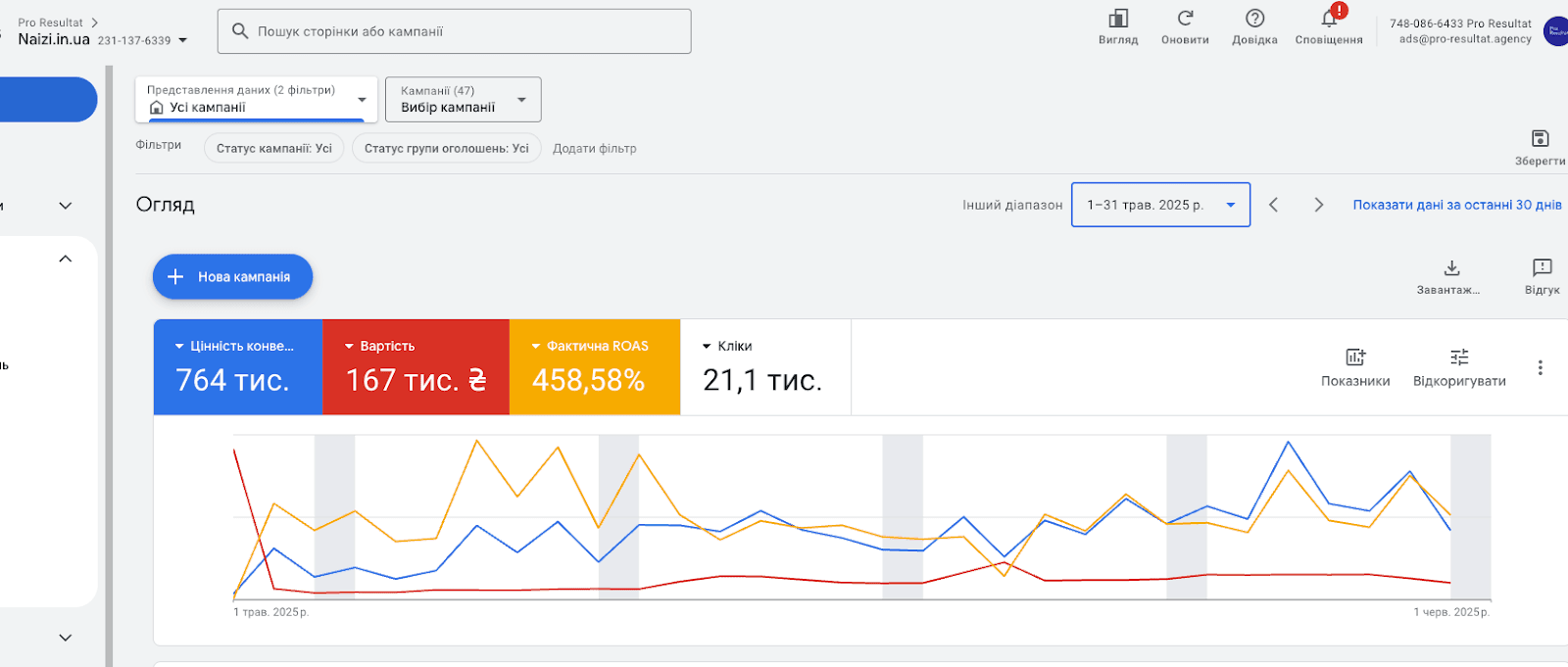
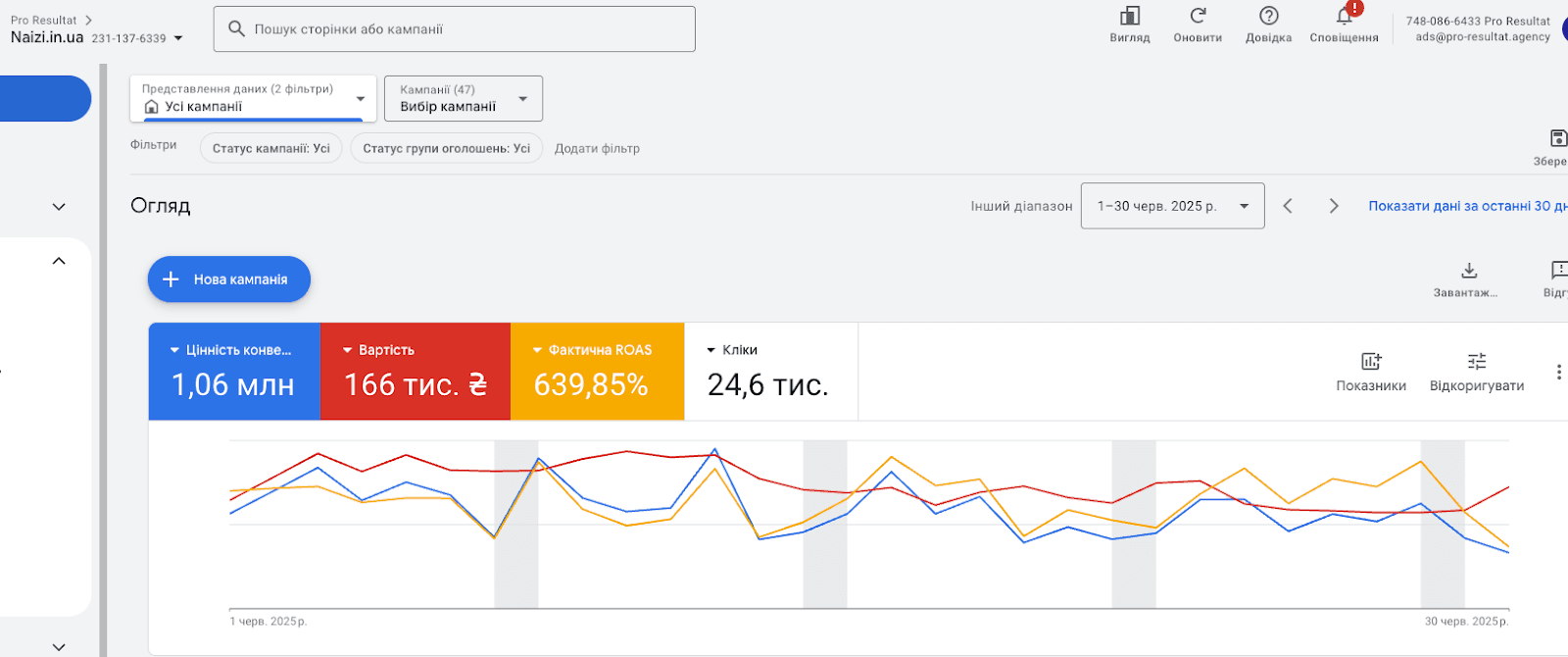
ROAS was 458% at the start of recovery in May 2025, 640% in June and 806% for February 2026. Budgets and reporting periods differ.
| Period | Conversion value, UAH | Ad spend, UAH | ROAS |
|---|---|---|---|
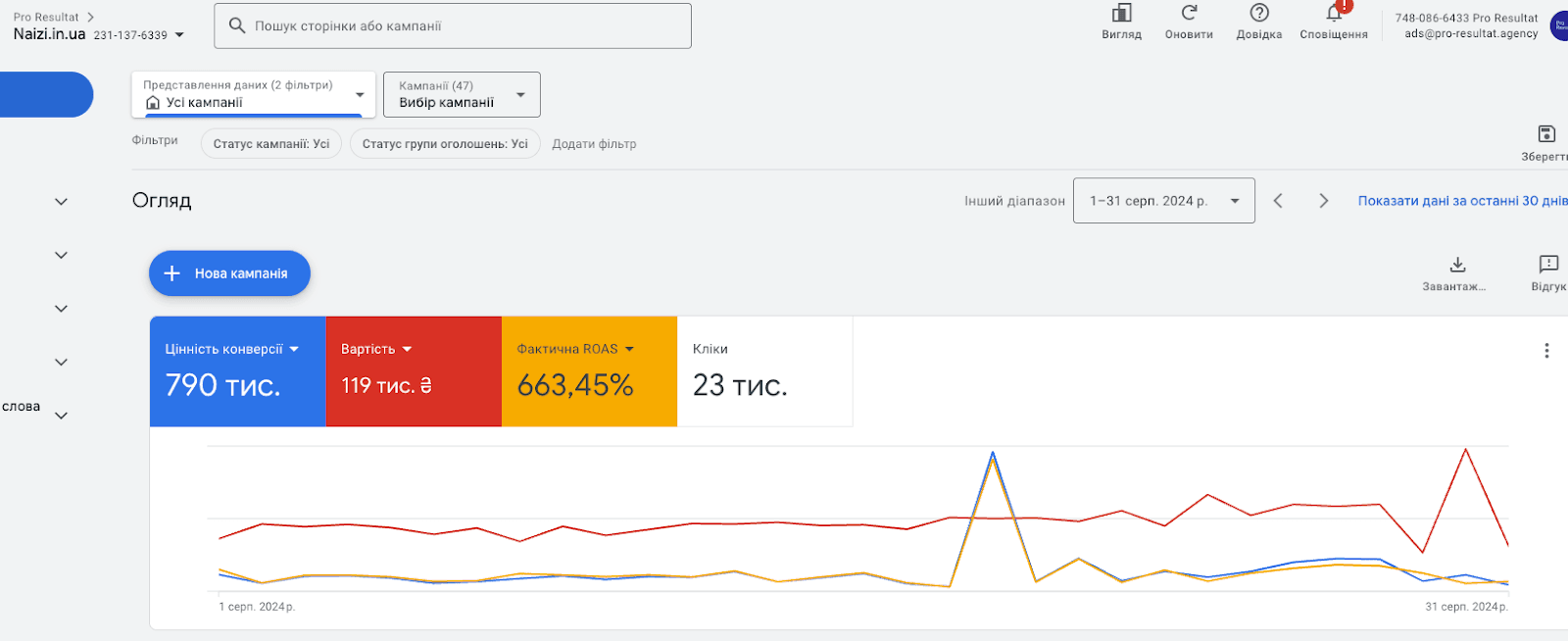
| August 2024Initial setup | 790 000 | 119 000 | 663% |
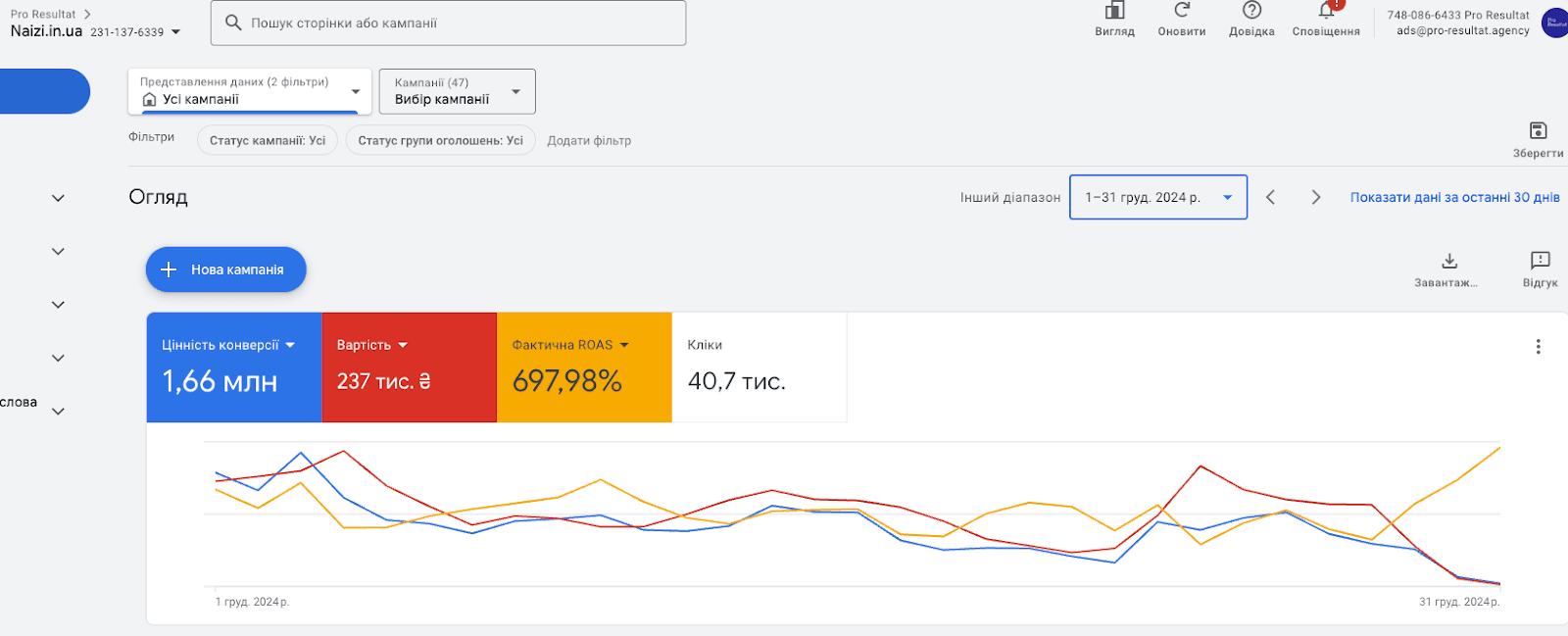
| December 2024Before independent management | 1 656 000 | 237 000 | 697% |
| May 2025Start of recovery | 763 700 | 166 500 | 458% |
| June 2025After work resumed | 1 063 000 | 166 000 | 640% |
| February 1–28, 2026Later reporting period | 3 420 000 | 424 000 | 806% |
Advertising results cover February 2026. The September–October 2026 Fraud Monitor protection work is described in the following sections.
Advertising results by stage
View the 2025 anomaly evidence
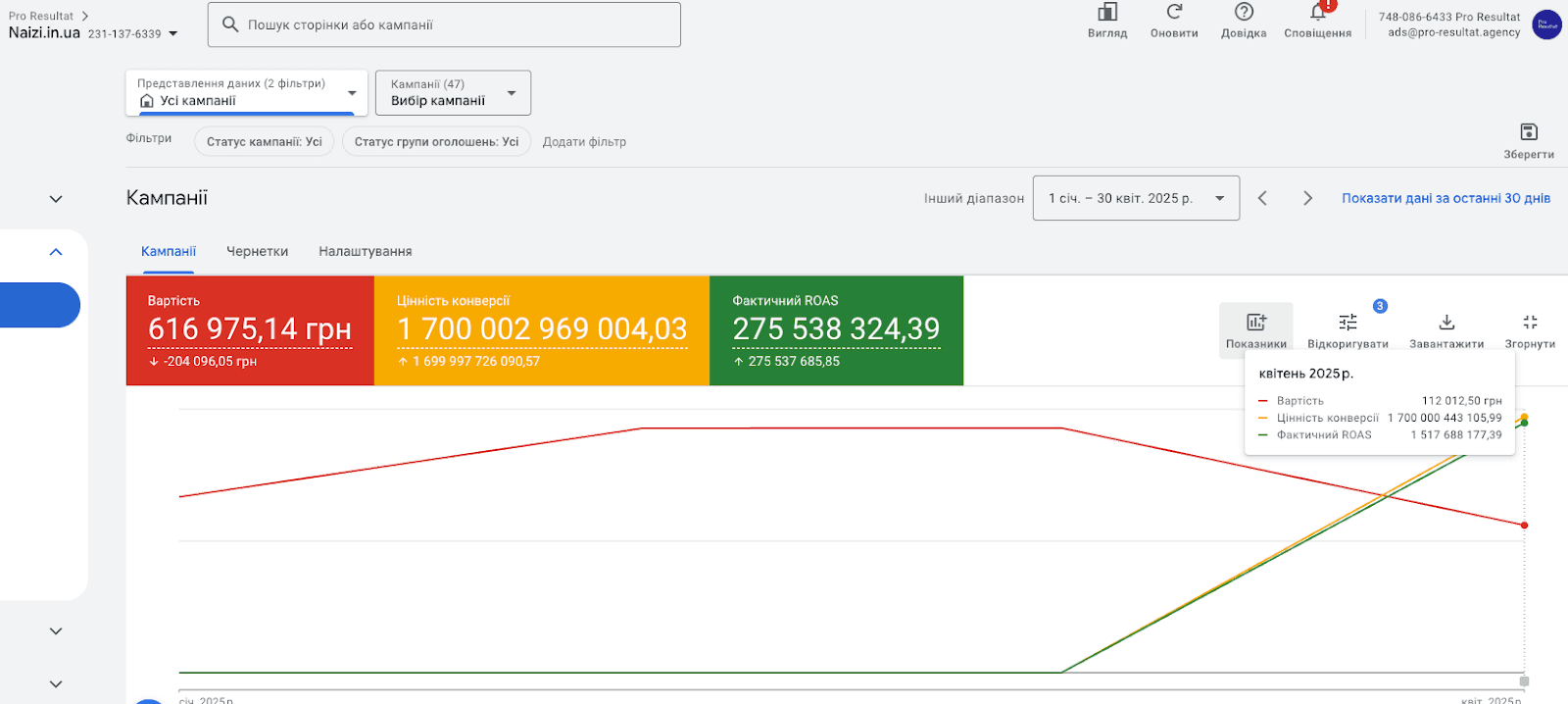
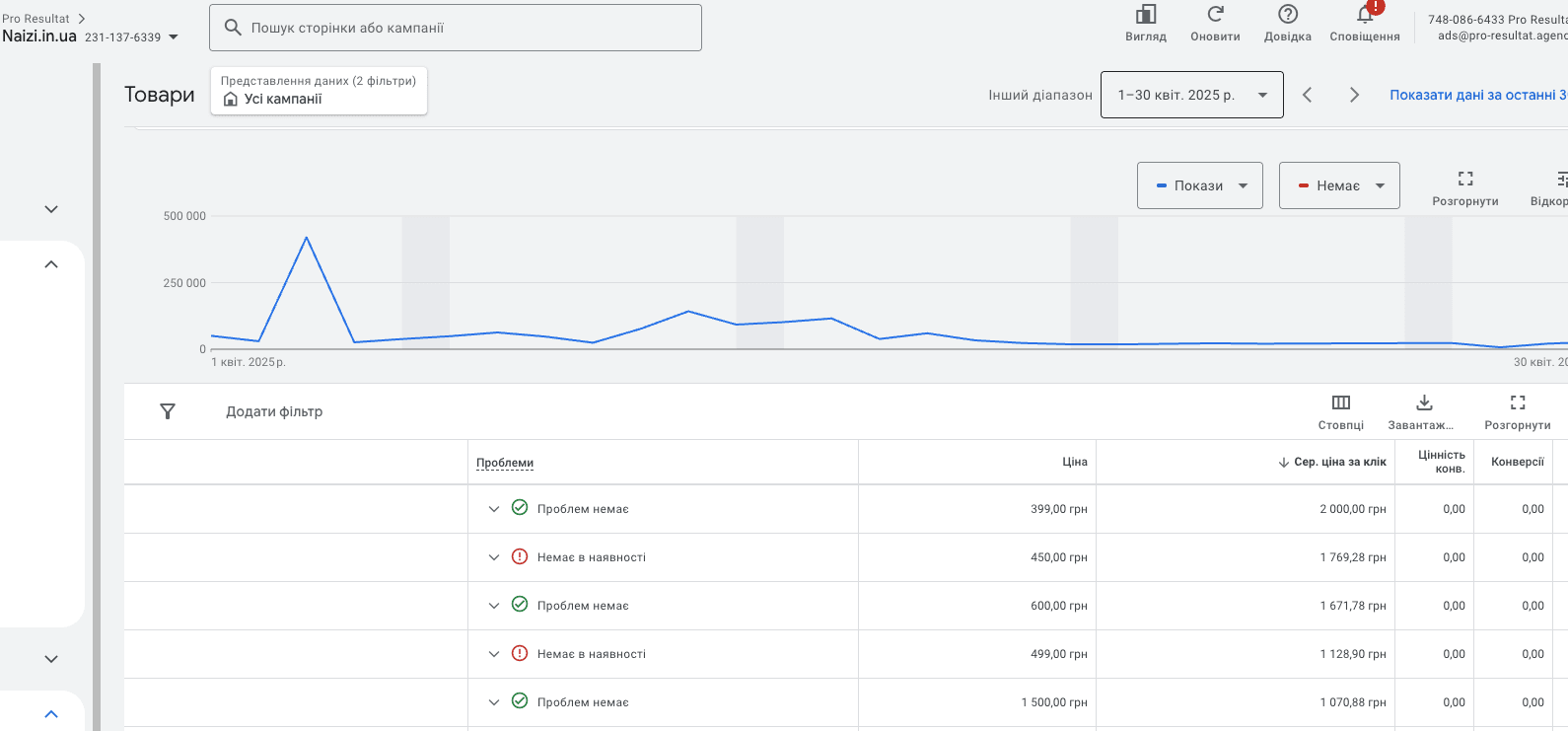
Fraud Monitor V2: from reacting to incidents to checking before an order
We built Fraud Monitor for Naizi to track anomalous purchases and protect advertising data. The first version logged visitor data, after which we filtered repeat attempts by IP address. However, the first anomalous purchase could get through before blocking.
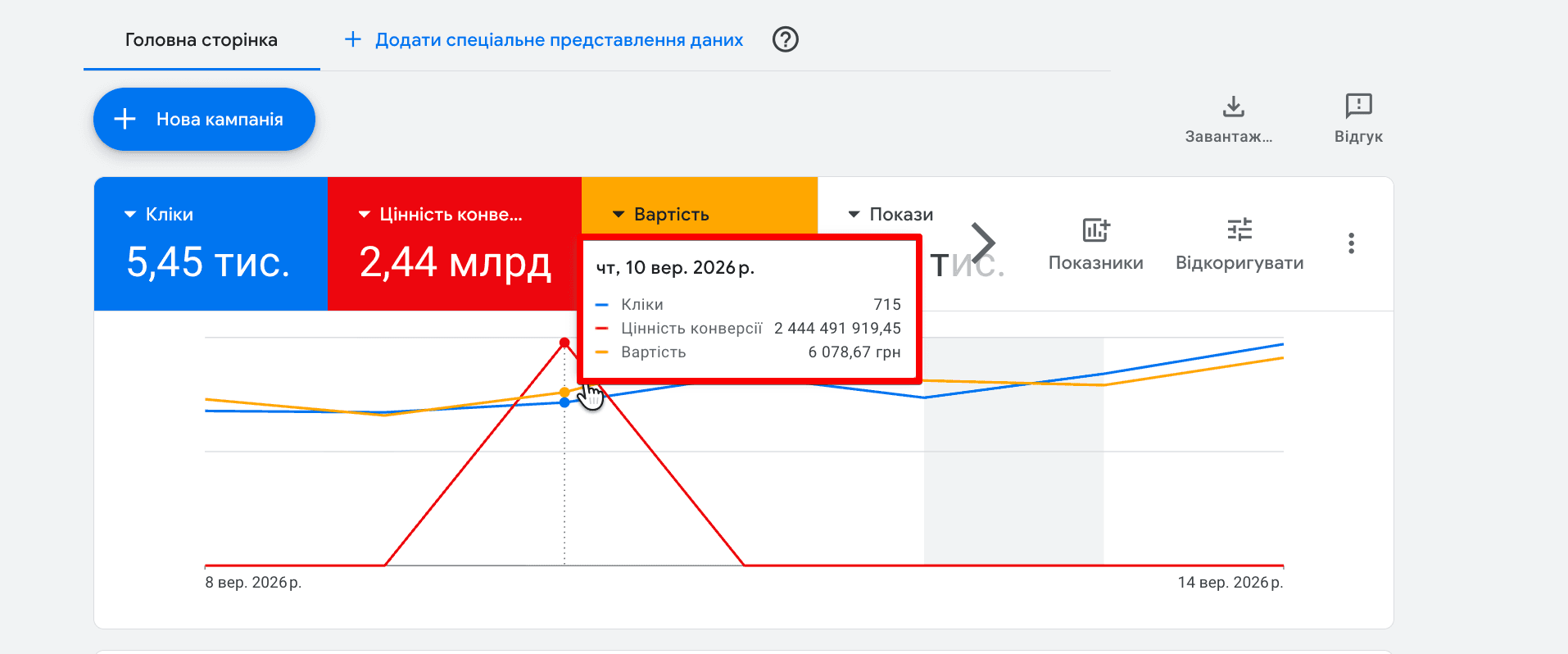
On September 10, 2026, Google Ads recorded 2,444,491,919.45 in conversion value. The recurrence prompted an update: Fraud Monitor V2 checks item quantity before checkout is completed and restricts carts containing 50 units or more.
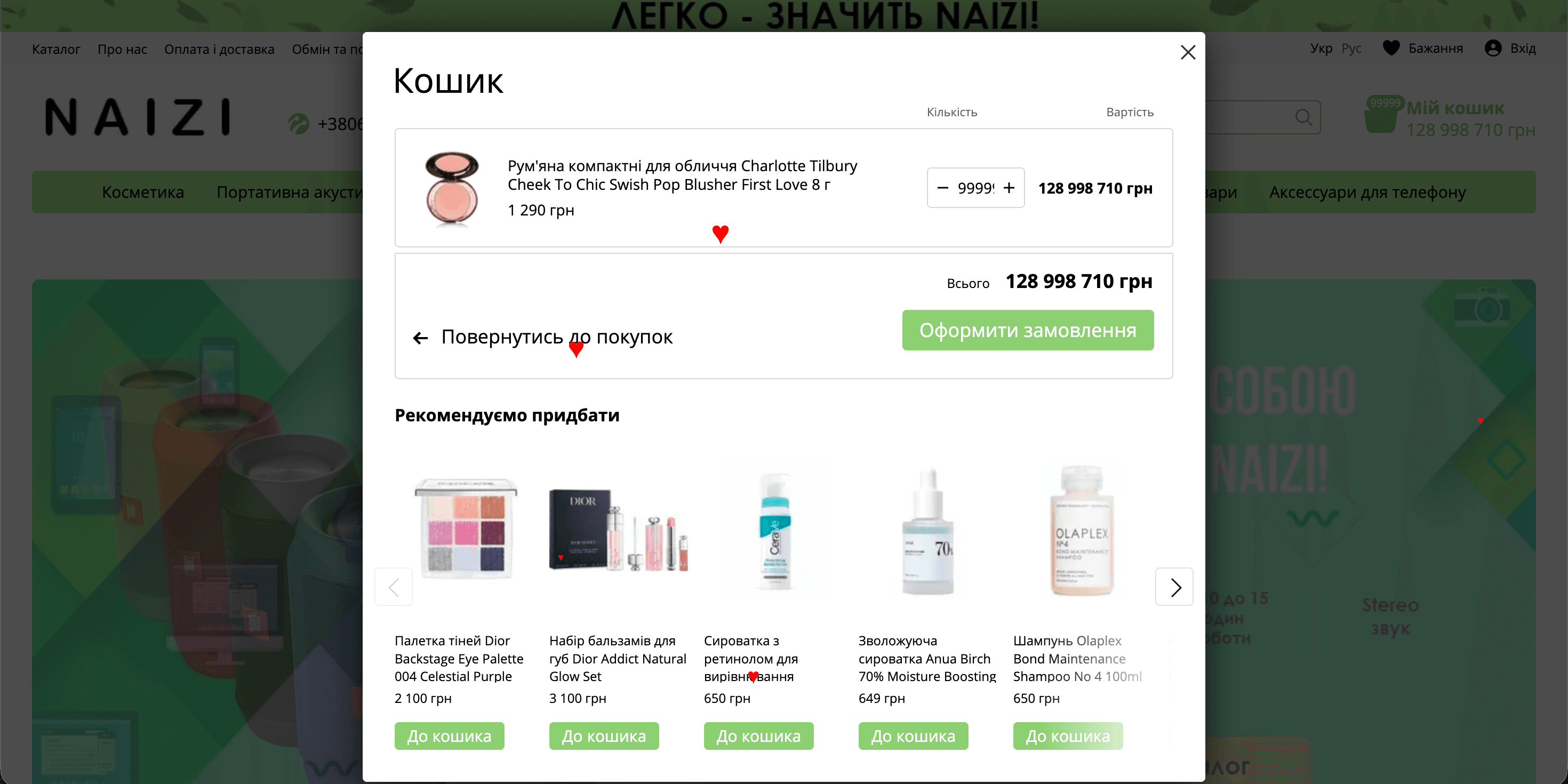
The billion-level amount reflects anomalous measurement events, not real sales. A separate example is a cart with 99,999 units totaling UAH 128,998,710. Advertising results for 2024–February 2026 appear above; the following sections show the later protection work in 2026.
What the problem looked like
How we updated Fraud Monitor
01
V1: record suspicious activity
We logged visitor data and used IP filtering for subsequent attempts. The first anomalous purchase could still get through.
02
A recurring incident
Critical purchase values appeared again in September 2026. We revised the logic to check the cart earlier.
03
V2: check before completion
At 50 units or more, checkout is restricted, the visitor sees an explanation and the event is logged.
Boundary check: 49 versus 50+ units
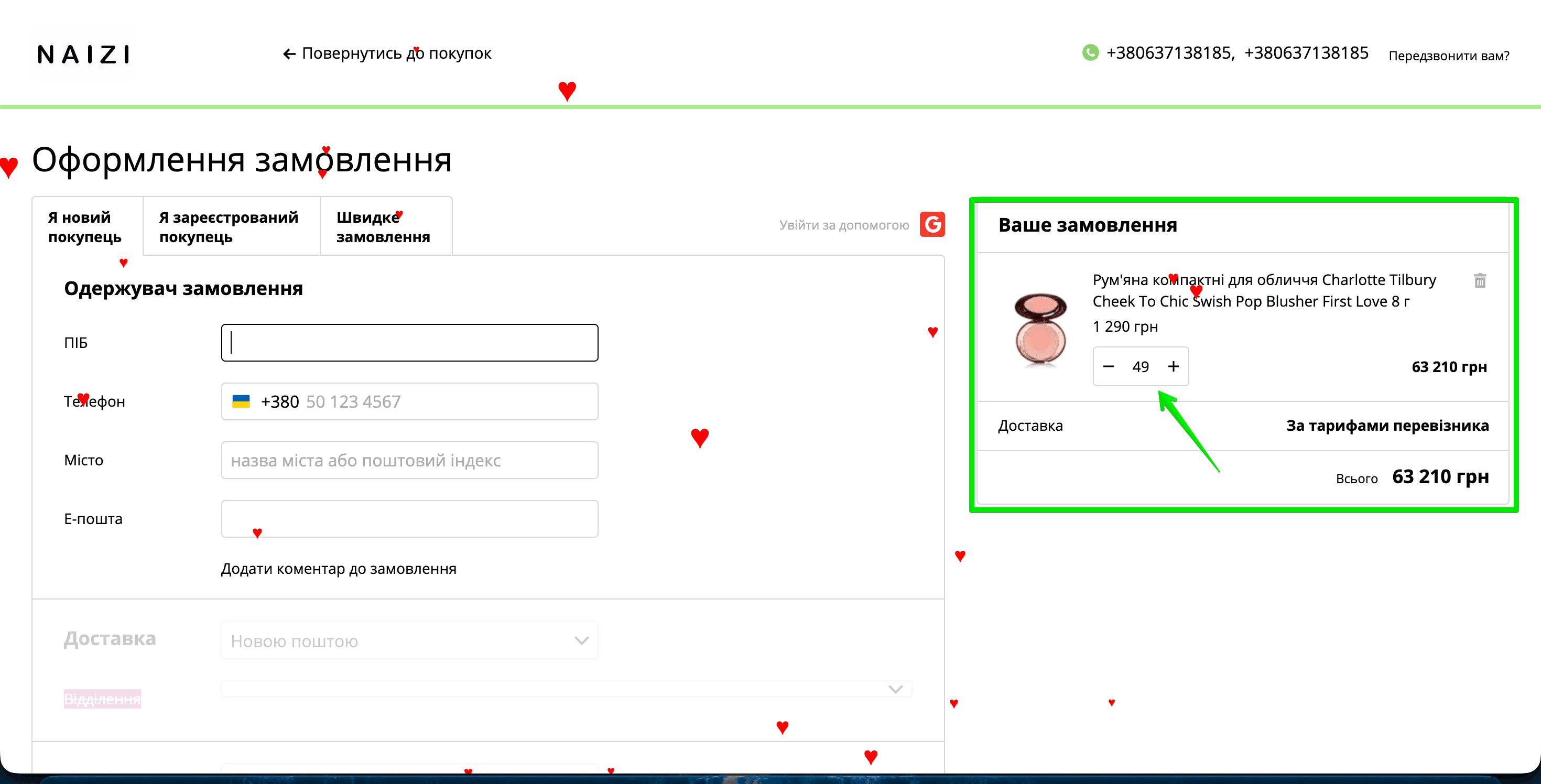
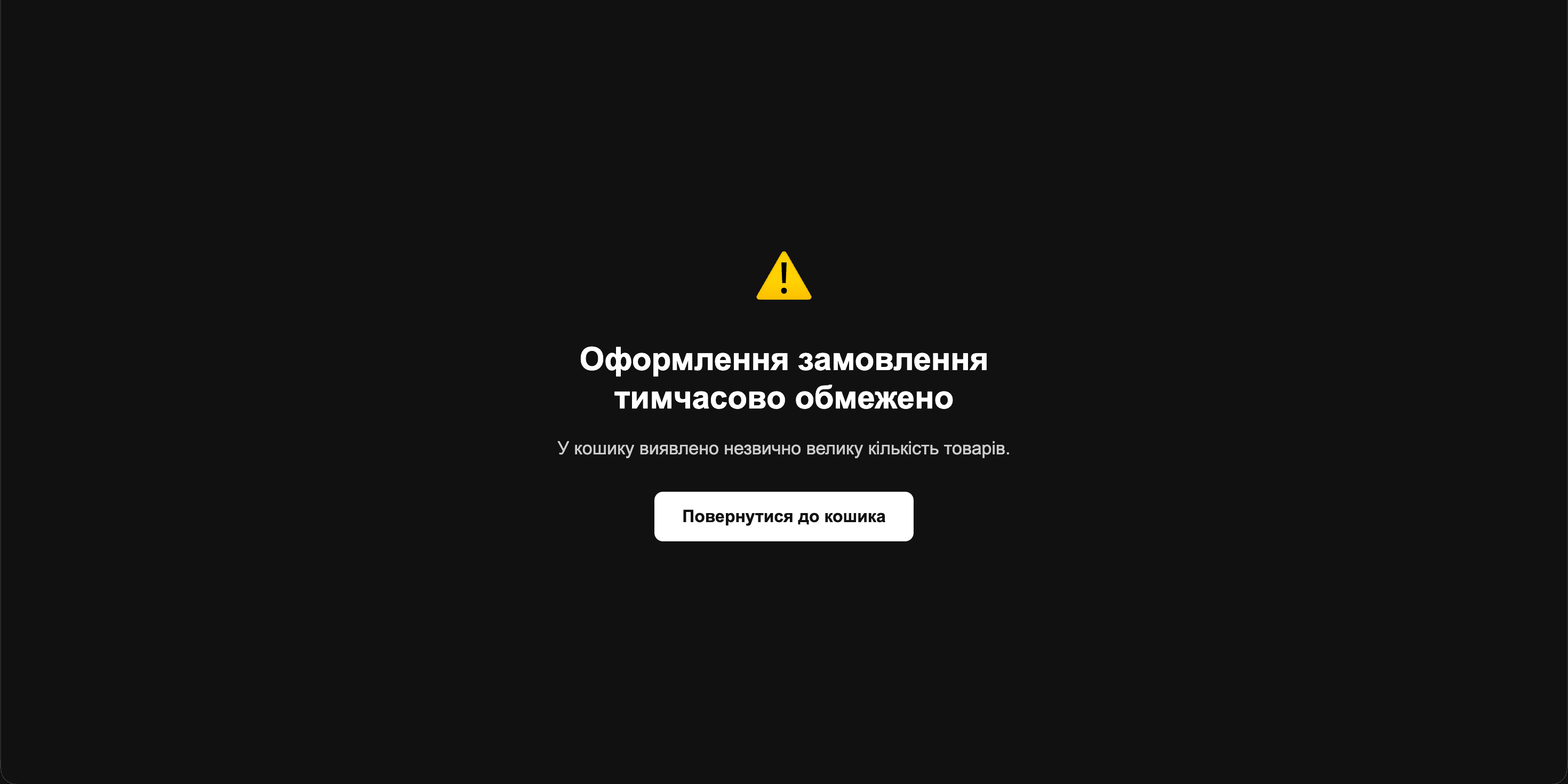
Event log
Fraud Monitor V2 records triggers at CHECKOUT with the QTY_ATTACK type. The log helps check the threshold and review which checkout attempts were restricted.
| Date | Quantity | Event | Blocked |
|---|---|---|---|
| 15.09.2026 | 51 | fraud_block | YES |
| 15.09.2026 | 50 | fraud_block | YES |
| 18.10.2026 | 50 | fraud_block | YES |
| 18.10.2026 | 99999 | fraud_block | YES |
What the second version changes
V1 helped identify suspicious activity and filter subsequent attempts. V2 adds a preventive quantity check: when the rule triggers, checkout is restricted before the purchase is completed. This moves the control closer to the source of the anomalous signal.
Historical conversion handling and invalid-click reviews remain separate parts of campaign support. A Google Ads audit can help review the setup and measurement, followed by ongoing Google Ads management.